Recycling and Sustainability at Landscaping Seven Sisters
 At Landscaping Seven Sisters, sustainability is built into the way we plan, work, and maintain outdoor spaces. Our approach to landscaping recycling starts with reducing avoidable waste, keeping materials in circulation for as long as possible, and choosing practical solutions that support cleaner neighbourhoods. We set a clear recycling percentage target of at least 90% diversion of reusable green waste and construction by-products away from landfill across our day-to-day landscaping operations. That means a stronger focus on composting, sorting, repurposing, and segregating materials at source so that soil, wood, metal, plastic, and plant matter can each follow the most appropriate route.
Across the boroughs we work in, waste separation is increasingly shaped by local collection rules and transfer-station practices, so our teams keep a close eye on how different materials must be sorted. In many areas, borough-led recycling systems ask for cleaner separation of garden waste, hard landscaping spoil, packaging, and mixed refuse, which helps improve recovery rates. Our Landscape Seven Sisters recycling process supports that approach by separating waste at the point of work wherever possible, helping reduce contamination and making it easier for local facilities to recover usable material.
We also make use of local transfer stations to keep transport efficient and support responsible disposal. By routing suitable loads through nearby facilities rather than sending waste on long, unnecessary journeys, we reduce fuel use and improve turnaround times. This is especially valuable for green waste, broken aggregates, and inert materials generated during maintenance and installation work.  In practice, that means a more organised system for sorting and moving materials, with an emphasis on reusable soil, timber offcuts, and recyclable packaging from deliveries.
Partnerships with charities are another important part of our sustainability strategy. Wherever possible, we identify surplus items that can be passed on for community benefit instead of being discarded. Good-quality planters, paving offcuts, decorative stones, usable timber, and gently used outdoor fixtures may be suitable for donation to local charities, community gardens, training projects, or social enterprises. These partnerships give materials a second life and help support organisations that create environmental and social value at the same time. For Seven Sisters landscaping work, this approach makes the most sense when projects produce items that remain safe, functional, and suitable for re-use.
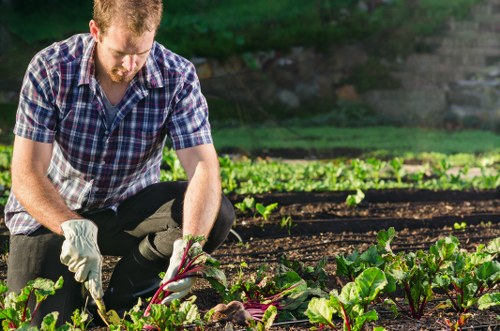
Our teams also focus on responsible management of organic waste. Grass cuttings, hedge trimmings, leaves, and other green material are separated and directed toward composting or approved recovery routes where feasible. This lowers the need for general waste disposal and aligns with the boroughs’ growing emphasis on garden waste separation. In areas with stricter waste rules, sorting clean green waste from mixed loads is especially important, and we train our crews to keep those streams distinct. As a result, Landscaping Seven Sisters can support healthier soil cycles while limiting landfill impact.
 Low-carbon vans play a major role in our day-to-day operations. We are gradually shifting toward lower-emission vehicles and more efficient route planning to reduce the carbon footprint associated with travel between sites, suppliers, and transfer stations. That includes using vans with improved fuel economy, considering hybrid and electric options, and loading vehicles carefully so fewer trips are needed. This practical step is a key part of sustainable landscaping in Seven Sisters, where compact urban routes and multiple small jobs can create significant transport emissions if they are not managed carefully.
We take the same measured approach to packaging and delivery waste. Materials often arrive wrapped, banded, or palletised, so we separate cardboard, plastic wrap, strapping, and wooden pallets for recycling or recovery. In boroughs where household and trade waste rules place a strong emphasis on dry mixed recycling, keeping these items clean and uncontaminated helps ensure they can be processed correctly. Our teams are also careful with soil bags, compost sacks, and protective coverings, choosing reusable options where practical and consolidating waste so it is easier to sort later. The result is a more responsible landscaping recycling model that fits the expectations of local waste systems.
Re-use is just as important as recycling. Leftover stone, topsoil, bark, sleepers, and edging materials can sometimes be stored for future jobs, provided they remain safe and suitable. This reduces the need to buy new materials for every project and lowers embodied carbon. Where on-site conditions allow, we also look for ways to incorporate reclaimed materials into new planting beds, pathways, and decorative features. These choices support a circular approach to Landscape Seven Sisters services and help keep good materials in productive use for longer.
 Before the final stage of any project, we review what has been collected so that anything recyclable is not left mixed with general waste. That final sorting step matters because even small amounts of contamination can reduce the value of a recycling load. By checking what goes into each stream, our crews help protect recovery rates at local transfer stations and support cleaner outcomes for the boroughs we serve. This careful method also reflects the broader sustainability priorities seen across London, where waste separation, resource efficiency, and lower-emission transport are becoming standard expectations rather than optional extras.
 For Landscaping Seven Sisters, sustainability is not a single action but a working system. It combines a clear recycling percentage target, efficient use of local transfer stations, partnerships with charities, and a transition toward low-carbon vans. Supported by careful sorting, re-use of materials, and awareness of borough-level waste separation practices, our Seven Sisters landscaping operations aim to cut waste and reduce environmental impact at every stage. The goal is simple: create attractive outdoor spaces while treating resources with the respect they deserve.